
Based in Pocahontas State Park
Serving Chesterfield County and the Greater Richmond Area


Pocahontas State Park Discovery Series
Explorer's Guide to Butterflies
The images and information provided here can help you identify some of the butterflies commonly found at Pocahontas State Park. See how many you can find during your visit!
You can find more information and see additional pictures of these butterflies (and other common Virginia butterflies) online at Butterfly Identification.


Spring Azure
Size: Very small, 1” wingspan
Color & Markings: Powdery blue wings with black spots on the undersides
Host Plants: woody shrubs, dogwood, New Jersey tea
Spring azure flies in spring only; summer azures can be found during spring and summer
Eastern Pine Elfin
Size: Small, ¾” to 1 ¼” wingspan
Color & Markings: Brown with gray and brown bands with white borders
Host Plant: pine
Found March through June, near pines
Eastern Tailed Blue
Size: Small, ¾” - 1”
Color & Markings: Light grayish blue with two orange spots and two tails; Black dots on underside of wings
Host Plants: clover, vetch lespedeza, wild pea
Rubs tails together when resting
Cabbage White
Size: Small, 1 ¼” to 1 ¾” wingspan
Color & Markings: White wings with black spot
Host Plants: mustards
One of first seen in early spring
Sulphurs
Size: Depending on species wingspans can be up to 3”
Color & Markings: Yellow to yellow-orange; Some species can have black on wing
Host Plants: peas, alfalfa, clover
Can be found in a variety of habitats
Long-tailed Skipper
Size: Small, 1 ½” - 2” wingspan
Color & Markings: Dark blackish brown wings with iridescent blue-green on wings and body
Host Plants: vine legumes, wisteria
Easily recognizable because of two long ½” tails
Eastern Tiger Swallowtail
Size: Large with 2” - 4 ½” wingspan
Color & Markings: Yellow with black stripes and tails
Host Plants: leaves of wild cherry, sweetbay, magnolia, birch, ash, cottonwood, willow
Males are yellow, females can be yellow or dark with tiger stripes.
Spicebush Swallowtail
Size: Large with 2” - 4 ½” wingspan”
Color & Markings: shiny blue swoosh on wing and single row of white spots; orange spots on underwing, but missing one spot;
Spotted abdomen
Host Plants: spicebush, sassafras, tulip tree, sweetbay magnolia
Brushfoots
Largest family of butterflies, with more than 6,000 species distributed throughout most of the world. Medium to large sized, most have short forelegs, and many hold their colorful wings flat when resting. Also called brush-footed butterflies or four-footed butterflies because they are known to stand on only four legs while the other two are curled up; in some species, these forelegs have a brush-like set of hairs, which gives this family its other common name.

Painted Lady
Size: 2 ½”wingspan
Color & Markings: Tip of the forewing is dark with white spots.
Host Plants: hollyhock, artemesia (adults prefer open places)
Called the Cosmopolitan due to its wide range and migrations

American Lady
Size: 2” wingspan
Color & Markings: Two large eyespots on the underside of the hindwing; large black patch on forewing with white band; very small white dot in orange patch on forewing
Host Plants: sunflowers, artemesia, wormwood, ironweed
Called the Cosmopolitan due to its wide range and migrations

Monarch
Size: Large, 4” wingspan
Color & Markings: orange, black; rows of white spots on the edge of wings
Host Plants: milkweeds
Millions migrate between the US and the forests of central Mexico each year
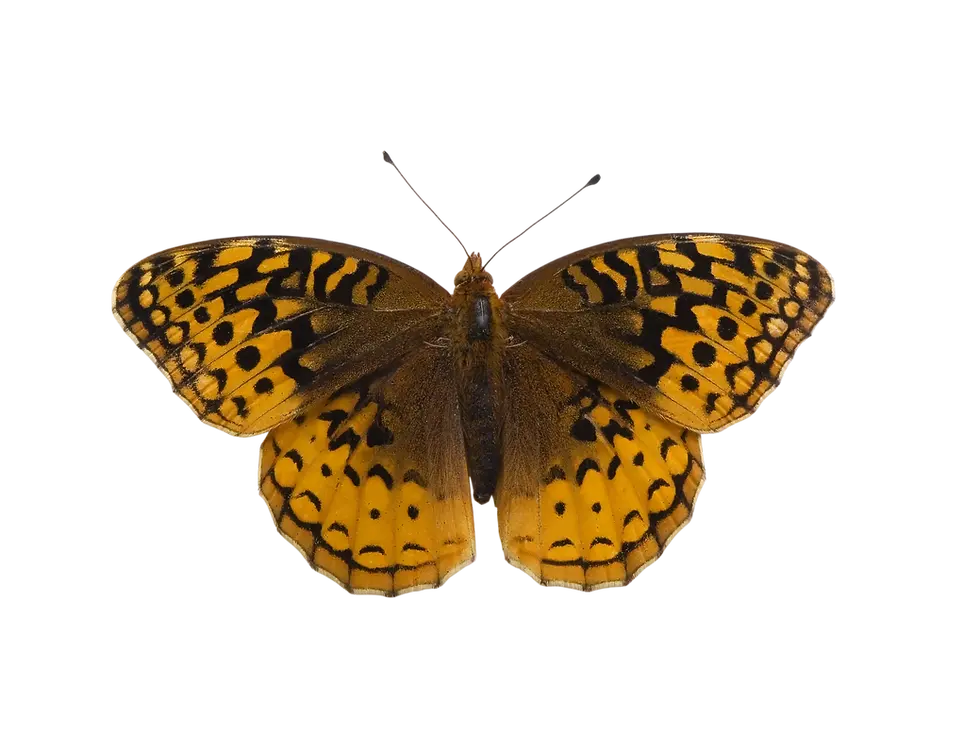
Great Spangled Fritillary
Size: Large, 3” wingspan
Color & Markings: Bright orange
Host Plants: violets
One of the best-known fritillaries; Males patrol in moist fields and woods to find females

Common Buckeye
Size: 2 ½” wingspan
Color & Markings: Reddish brown with two orange and one white wing band on forewings; eight distinct eyespots
Host Plants: plantain and snapdragon
Found primarily in open areas

Pearl Crescent
Size: Small, 1 ½” wingspan
Color & Markings: Black margins on wings; hindwing is marked
with dark crescent-shaped spots.
Host Plants: asters
Found around puddles and flowers; one of the most common butterflies
This guide was produced by members of the Pocahontas Chapter Virginia Master Naturalists for use by Pocahontas State Park staff, visitors, and guests.